
Sunday, 21 October 2012
180 Degree Rule - Grace's Notes

Saturday, 20 October 2012
Falling Down Non-Deigetic Sound Editing
The timeline was very effective in helping me match the sounds to use in with camera shots, this made the sound more believable and realistic to the scene. There was also a lot of cutting on the sound clips so that they change simultaneously with a change in a camera shot. Also sounds going on for too long will bore the audience. The quick transition of sound clips creates mystery as through sound very little is revealed about the scene.
The Foley sounds we used were heavy breathing, the car engine, children playing, tuning of the radio, a wasp buzzing and the radio. The reason why these sounds were used is because they matched the various camera shots that are in the scene, this makes them seem more realistic. Also by using all these sounds the audience will try and link the sounds to each other to form some sort of relationship, but the sound clips are unrelated to each other and therefore create mystery and tension. Two things that are very iconic of a thriller film.
Wednesday, 17 October 2012
Directors Commentary Evaluation
This is our groups preliminary task evaluation done in the form of a directors commentary, I worked on this with both Jake and Toby. We all reflected on our individual performances, as well as the groups overall performance.

Here is a screenshot of the preliminary task being looped and combined with the voice over commentary by all of us.

Tuesday, 16 October 2012
Shots and Their Descriptions - Six Ways To Kill Your Husband (Or Wife)
- Long shot of officer walking into room with match on action of him opening the door then picking up the movement when he enters the room.
- Wide high angle shot on convict
- Mid close up on officer
- Over the shoulder shot on convict - 180 degree rule
- Mid shot reverse shot on officer - he stands up
- High angle shot on both characters - match on action, continuous movement of officer moving around
- Close up on officers face
- Over the shoulder shot of convict
- Extreme close-up on officers face
- High angle mid shot on convicts face and shoulders
- Low shot of officer, with match on action of his movement
- Silhouette of officer walking out - Long shot
Sunday, 14 October 2012
Narrative In Film
Here is a screenshot of the video on narratives I completed using Go!Animate.

Tuesday, 9 October 2012
Self Assesment On Blog
Improve layout and presentation and add more on plot and characters, along with annotations.
Tasks I need to complete:
'Se7en' Title Re-make Edit
x1 Thriller Spoiler Review
'Dexter' Opening title Re-make
'Falling Down' Foley Score
''Lock Stock'' Composition
Group Sub-genres & Narrative for thriller
Tasks I need to complete:
'Se7en' Title Re-make Edit
x1 Thriller Spoiler Review
'Dexter' Opening title Re-make
'Falling Down' Foley Score
''Lock Stock'' Composition
Group Sub-genres & Narrative for thriller
Monday, 1 October 2012
How To: Adjustjusting Camera Exposure, Focus and White Balance through Mannual Setting
 |
| By clicking on the button menu all the camera adjustments come up on screen. |
 |
| The left and right buttons located on the camera enable you to scroll through various options. |
 |
By clicking on function, options for white balance and focus are available to use.
|
 |
| Move down on to the 'white balance' button and select it to adjust the white balance to your own preferences. |
 |
| Scroll down onto your preferred white balance option and hold down the 'menu' button until your proposed option flashes twice, then the white balance setting on the camera will be changed to your preference. Options vary due to various light sources you could be using when filming with the camera, for example sunlight or artificial light. |
 |
| At the top the zoom buttons are located to zoom in and out. |
 |
| Go back, using the camera then press the 'menu' button to get the exposure settings up. |
 |
| Using the scrolling buttons, you will be enabled to go on the exposure settings. |
 |
| Select the manual button to alter the exposure settings. |
 |
| Use the scrolling buttons to go up and down to set the exposure on the camera, this mostly depends on your location. |
 |
| Above the scrolling pad the 'focus' button and the focus setting will be shown and using the left and right buttons you can alter the focus setting on the camera. |
Wednesday, 26 September 2012
Spoiler Review - Shutter Island
 The film Shutter Island is
based on the novel of the same name by Dennis Lehane, and is directed by Martin
Scorsese. It is a crime/psychological thriller and mystery. Throughout the film
it constantly hints at clues then just as you think you have figured out the
mystery the storyline takes a U-turn and furthermore adds to the suspense.

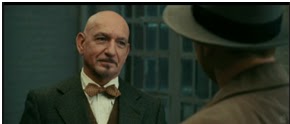
The film stars Teddy Daniels (Leonardo DiCaprio) and his partner Chuck Aule
(Mark Ruffalo) who are US Marshalls they go to a prison for the declared
criminally mentally insane. The man in charge of the care of the prison
patients is Dr. Crawley (Ben Kingsley) and at the end of the film the question
you are left with is whether his character is good or evil?
 The purpose of
their journey to the prison is to investigate a missing woman named Rachel
Solando. The mystery of the film is brilliant, even up to the last scene of the
film you are still very unsure of the full truth. Is the protagonist Teddy
Daniels or Andrew Laeddis?Is he insane or a victim of the corruption the prison is operating through?

The first mystery that’s sets the tone of the film is the riddle believed to be left by Rachel Solando, the escaped prisoner, the rule of 4 who is 67? Indicating there is an unknown 67th patient at the prison.
 The overall
head of the ‘psychiatric hospital’ is Dr. Naehring (Max von Sydow), who is a
mystery as a character, he has a reserved but strange personality. Everyone except Teddy Daniels has no real back-story or any revealing of their
past in the whole story, which adds a lot to the suspense of the film, just
thorough the plot. Many
flashbacks are featured through out Teddy Daniels life, especially with his
wife, kids and WW2 when fighting against Germany along with the discovery of
the persecution of Jews.
 The story is a real mind bender when introduced into both the possible Rachel’s and when she suddenly returns to the
prison untouched by the harsh weather. The flashbacks of his wife and children
create an illusion still not answered of whether he killed his wife due to her
killing the children, or whether the children and mother all died in a fire,
set by a man named Andrew Laeddis.
 A very convincing portrayal of characters by
all the actors in the film added with the amazingly mind-twisting storyline is
what really makes the film a success.

Additionally the ability to still have so many unanswered questions by the end of the story is quite brilliant. Are Teddy Daniels and Andrew Laeddis the same person? Is he really a patient in the prison? Is Rachel Solando real?

Who is the 67th inmate at the prison? The most important question left unanswered though: Is Teddy Daniels living in a fantasy world or is this reality?

 The film created a lot of mystery and suspense, some of it still unanswered and overall a very mind-twistingly confusing film that still managed to entertain and fascinate as a thriller, so for that I give it a rating of 5/5.
Sunday, 23 September 2012
Thriller Film Setting Picture

This is the picture have I taken of the priory centre car park in Dartford, in which I chose as a suitable setting for a thriller film. I have done this task to properly understand what a thriller film setting would look like. I have chosen this car park as it's quite deserted with only a few cars, giving mystery and the lighting is also good only providing limited light reflecting a typical mood of a scene in a thriller. Also the car park can realisticly tie in with the common large city setting thriller films seem to often have.
Genre Iconography Mood Board

This is the thriller iconography collage I created of pictures that best show and define what a thriller film is. All pictures come under a category of:
·
Props
& set design
·
Locations
& Settings
·
Lighting
& Colours
·
Characters
·
Typical
Scenes
The reason why I have done this task is to be able to fully recognize the characteristics of a thriller,
which will help us later when we make our own 2 minute thriller opening.
Regarding props and set design a common theme was the use of guns along with a dark setting. This is because of the guns adding to the mystery of thrillers - will the character get shot or escape? Also there are a lot of crime thrillers made which guns are a major prop used. The dark set design involved in thrillers are a representation of the mood represented in a scene of a thriller film.Generally some form of weapon whether it be the mind, a gun or fists tends to be used.
Looking at locations and settings, thrillers seem to often be set in busy metropolitan cities, and around the adult world, (children rarely play a huge part in a thriller). Settings can be broad when referring to a thriller taking place, but they have to be linked in with the busy city it is set in. For example a car park can be used for a thriller, but the woods cannot, as they are not find in cities.
Lighting and colours used in thrillers seem to be dark and if light is used it it to highlight the characters facial expression, show emotion/mood or to draw attention to something significant in the film. Light colours are also used to highlight appearance like scars. Depending on whether a mystery is to be revealed or not either light or dark colour will be used for the scene.
From the collage I created above various thrillers seem to have common characters. A protagonist(s) and antagonist(s) are always involved with some conflict and especially in psychological thrillers a mentally unstable character is involved. Although saying this, thrillers seem to have a character that has some form of crazy characteristic about themselves, (for example a hitman who has no remorse in a crime thriller).
Through evidence gathered from the thriller collage, typical scenes in thrillers are suspenseful and mysterious, fast paced action whether it be physical or mental is also involved.
Wednesday, 19 September 2012
AS Media Studies Mark Scheme

The class were given a task of remembering the work that had to be done and when it the deadline for it was, then three of us wrote in on the board and also put how much each task was worth. This way all of us are informed on how much marks are awarded for each task, the deadlines for them and what the task requires us to do.
Alien3 Title Sequence Credits Timeline

Throughout the Alien3 title sequence a black background is used with tension building music and no acting is incorporated within the opening credits. The only things that give an insight into the film is the dark black background which creates a mood of darkness and evil. Along with this, the tension building music sets the pace the film is to follow. The reason why I have done a title sequence timeline is to get an accurate estimate of how many individual people are credited in a film at the start, and how long it takes for this to happen. Additionally the techniques film makers use to keep the audiences interest whilst showing the title sequence. Also doing this task has shown me who are the most important figures when it comes to all those involved with the film; for example the first credit the film opens with is the studio, who made the film possible to be released and produced. Another thing learned through this task is how it is important to credit the studio company, cast and crew members in a film as it is a legal requirement that if not followed can result in consequences such as being sued.
Tuesday, 18 September 2012
Thriller Mindmap

All the class compiled a mind map of what is expected in a thriller whether it be themes, storyline, mood or atmosphere, all students contributed to this and it helped me to have more of a grasp of what makes a thriller.
Tuesday, 11 September 2012
Title sequence timeline - Alien3
 |
| 0.27 |
 |
| 0.33 |
 |
| 0.39 |
 |
| 0.46 |
 |
| 0.55 |
 |
| 1.03 |
 |
| 1.12 |
 |
| 1.18 |
 |
| 1.24 |
 |
| 1.29 |
 |
| 1.35 |
 |
| 1.43 |
 |
| 1.49 |
 |
| 1.55 |
 |
| 2.05 |
 |
| 2.13 |
 |
| 2.20 |
 |
| 2.26 |
 |
| 2.32 |
 |
| 2.40 |
 |
| 2.45 |
 |
| 2.51 |
 |
| 3.04 |
 |
| 3.10 |
 |
| 3.16 |
 |
| 3.23 |
 |
| 3.29 |
 | |
| 3.36 |
David Owootomo and Toby Gearing - We have both compiled a list of individual credits of the various crew members and the studio that have been credited in the opening title sequence. Whilst getting all the credits of the various members and studio who have been involved in Alien3, the specific order of names being shown is significant. The studio, then production company mentioned first, then the actors and film name and following this the crew members. It could be interpreted that the studio who comes first in the credits and basically own rights to the film are the ones in control of the opening credits, and the order choice used could relates to the importance of the crew in relevance to the audience. It cannot be said that the title sequence order of the crew members relates to the contribution they had to the film. I say this due to the director being listed last on the credits, who effectively was the main one to make the film but is listed last, and the actors are listed first who may not have contributed as much to the making of the film.
Subscribe to:
Posts (Atom)